

Cellomatics Biosciences

Inflammation

Inflammation Assays

In Vitro Inflammation Models for Preclinical Drug Discovery

Cellomatics is a specialist CRO providing advanced inflammation models to support drug discovery programmes across a range of therapeutic areas. As a trusted partner in preclinical research, we deliver robust, human-relevant inflammatory disease models designed to improve translatability and accelerate decision-making.

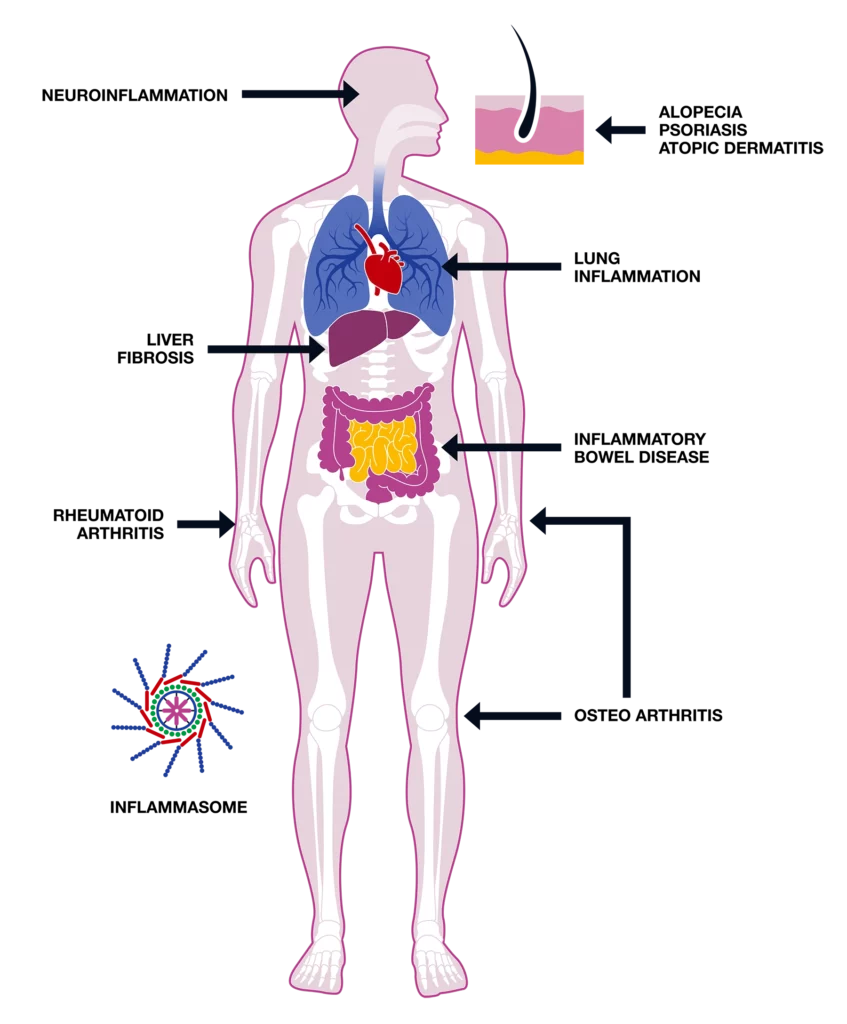
Our expertise spans inflammatory disease research across autoimmune and immuno-inflammatory conditions, including rheumatoid arthritis, psoriasis, inflammatory bowel disease (IBD), osteoarthritis, autoimmune skin diseases, fibrosis, and neuroinflammation. By combining deep capabilities in both immunology and inflammation, we develop integrated models that better reflect complex disease biology, utilising 2D systems, 3D spheroids, and organoid-based platforms.

Using physiologically relevant human cell systems, we generate high-quality, decision-driving data to support target validation and candidate selection. We work closely with biotech and pharmaceutical partners to de-risk development and enable confident progression through early discovery and beyond.

Cellomatics Biosciences

What are inflammation models in drug discovery?

Inflammation models are experimental systems used to investigate the biological mechanisms underlying inflammatory responses and to evaluate potential therapeutic interventions. They enable researchers to understand how immune and tissue-specific processes contribute to disease progression across a wide range of conditions.

  • Designed to reflect specific disease contexts, including autoimmune disorders, chronic inflammation, and tissue-specific pathologies
  • Utilise human cells and physiologically relevant systems
  • Capture key features such as immune activation, cytokine signalling, and cell–cell interactions

In preclinical research, inflammation models play a critical role in early-stage drug discovery, supporting the evaluation of new therapeutic strategies in controlled environments.

  • Enable target identification and validation
  • Support mechanism-of-action studies
  • Facilitate compound screening and optimisation
  • Provide controlled and reproducible systems for generating reliable data

Together, these models generate meaningful insights that guide the development and optimisation of new therapies prior to clinical evaluation.

Our inflammation research models

Inflammation is a key driver across many diseases, requiring robust and predictive systems to better understand underlying mechanisms and therapeutic responses. At Cellomatics, our models are designed to support early-stage decision-making by enabling the study of both immune-driven and tissue-associated inflammatory processes in controlled environments.

  • Advanced, human-relevant in vitro models reflecting key aspects of inflammation biology
  • Study of complex immune and tissue interactions in a controlled setting
  • Consistent and reproducible outputs for reliable data generation

These systems enable biologically meaningful evaluation of therapeutic candidates and generate high-quality data to guide early-stage progression, improving confidence in candidate selection and development strategies.

Inflammatory disease model expertise

Cellomatics supports a broad range of inflammatory disease models designed to address the complexity of inflammation-driven conditions. Our approach focuses on flexible, fit-for-purpose systems that can be aligned to specific research questions, enabling precise investigation of diverse inflammatory pathways and responses.

  • Capture both immune and tissue-level interactions, including immune cell activity, mediator release, and tissue responses
  • Built on strong expertise in immunology and inflammation, ensuring biologically relevant model design
  • Access to freshly isolated primary immune cells from on-site healthy donor blood collection
  • Access to a broad range of human tissues across autoimmune and inflammatory conditions
  • Controlled and reproducible systems for studying immuno-inflammatory diseases

Our preclinical models are applied across multiple disease areas, including rheumatoid arthritis, psoriasis, inflammatory bowel disease (IBD), osteoarthritis, autoimmune skin diseases, fibrosis, and neuroinflammation, supporting both mechanistic studies and therapeutic evaluation.

  • Available in human-relevant formats: 2D cultures, 3D spheroids, and organoid-based systems
  • Flexible balance between scalability and biological complexity
  • Generate consistent, decision-supporting data to advance early-stage research and development

Inflammatory skin disease research

Cellomatics supports inflammatory skin disease models to advance inflammatory skin disorder research, including conditions such as atopic dermatitis and psoriasis. Our human-relevant systems capture key interactions between immune responses and skin tissue, enabling meaningful evaluation of therapeutic candidates and supporting data-driven decisions in early-stage drug development.

Cellomatics Biosciences

Atopic Dermatitis (AD)

Cellomatics develops inflammatory skin disease models to support inflammatory skin disorder research in atopic dermatitis. Our models capture key features of AD, including barrier dysfunction and immune-driven inflammation, enabling the evaluation of therapeutic candidates targeting inflammatory responses in the skin. These systems provide a relevant platform to assess efficacy and support early-stage drug discovery.
Find out more
Cellomatics Biosciences

Psoriasis

Our psoriasis inflammation model is designed to reflect the immune-mediated nature of the disease, where dysregulated immune activity drives chronic skin inflammation. Using advanced inflammatory skin disease models, we support the assessment of therapeutic candidates targeting inflammatory pathways relevant to psoriasis, helping generate data to inform drug discovery and development decisions.
Find out more
Cellomatics Biosciences

Inflammatory Bowel Disease (IBD)

Cellomatics develops advanced in vitro models to study intestinal inflammation and support therapeutic evaluation in IBD. Our systems incorporate key epithelial–immune interactions using primary intestinal epithelial cells and co-cultures with immune cells from both healthy and diseased donors, enabling a more disease-relevant approach. We utilise Caco-2 monoculture models to assess epithelial barrier integrity and permeability, alongside Caco-2/THP-1 co-culture systems to capture immune–epithelial cross-talk. These platforms provide a physiologically relevant and predictive framework for evaluating compound efficacy and supporting translational drug discovery programmes targeting intestinal inflammation.
Find out more
Cellomatics Biosciences

Osteoarthritis (OA)

Cellomatics develops advanced osteoarthritis inflammation models to support the study of joint degeneration and therapeutic evaluation in osteoarthritis. Our joint inflammation model systems are designed to reflect key aspects of disease biology, including inflammatory signalling within the joint environment. These models enable the investigation of pathways associated with cartilage degradation, including the impact of inflammatory mediators on tissue integrity and function. By providing controlled, human-relevant systems, we support the assessment of therapeutic candidates targeting both inflammation and structural changes in osteoarthritis.
Find out more
Cellomatics Biosciences

Non-Alcoholic Steatohepatitis (NASH)

Cellomatics develops advanced NASH inflammation models to support the study of liver inflammation in metabolic disease. Our in vitro NASH model systems are designed to reflect key features of disease progression, including steatosis, metabolic stress, and associated inflammatory responses. These metabolic inflammation models enable the investigation of pathways linked to fibrosis and liver injury, providing a relevant framework to evaluate therapeutic candidates. By capturing the interplay between metabolic dysfunction and inflammation, our models support early-stage drug discovery programmes targeting NASH.
Find out more
Cellomatics Biosciences

Rheumatoid Arthritis (RA)

Cellomatics develops advanced rheumatoid arthritis inflammation models to support the study of immune-driven joint inflammation and therapeutic evaluation in RA. Our RA inflammation model systems are designed to reflect key aspects of disease biology, including chronic inflammation within the joint environment. These models enable the investigation of inflammatory signalling and tissue-destructive processes associated with synovial inflammation and joint damage. By providing human-relevant systems, we support the evaluation of therapeutic candidates targeting immune-mediated pathways and help generate data to inform early-stage drug discovery in rheumatoid arthritis.
More information coming soon
Cellomatics Biosciences

Cutaneous Lupus Erythematosus (CLE)

Cellomatics develops advanced cutaneous lupus inflammation models to support research into immune-mediated skin inflammation associated with CLE. Our CLE inflammation model systems are designed to reflect key features of autoimmune-driven skin responses, including chronic inflammation and tissue damage. These models enable the study of inflammatory signalling and immune–skin interactions relevant to disease progression. By using human-relevant systems, we support the evaluation of therapeutic candidates targeting autoimmune and inflammatory pathways in cutaneous lupus.
More information coming soon
Cellomatics Biosciences

Scleroderma

Cellomatics offers specialised scleroderma inflammation models to support research into fibrosis-driven inflammatory conditions. Our fibrosis inflammation model systems are designed to capture the interplay between inflammation and tissue remodelling that characterises scleroderma. These models enable the investigation of pathways linked to immune activation, fibrosis, and extracellular matrix deposition. By providing relevant in vitro systems, we support therapeutic evaluation targeting both inflammatory and fibrotic components of the disease.
More information coming soon
Cellomatics Biosciences

Hidradenitis Suppurativa (HS)

Cellomatics develops hidradenitis suppurativa inflammation models to support research into chronic inflammatory skin disorders. Our HS inflammation model systems are designed to reflect key aspects of immune dysregulation and persistent inflammation seen in this condition. These models enable the study of inflammatory responses and tissue-level changes associated with HS. By utilising human-relevant platforms, we support the assessment of therapeutic candidates targeting inflammatory pathways in hidradenitis suppurativa.
More information coming soon
Cellomatics Biosciences

Fibrosis

Cellomatics develops advanced fibrosis inflammation models to support research into chronic inflammatory conditions affecting multiple organs, including the liver, lung, and kidney. Our fibrotic disease models are designed to capture the link between persistent inflammation and progressive tissue remodelling. These models enable the study of key processes such as inflammatory signalling, fibroblast activation, and extracellular matrix deposition across different tissue types. By utilising human-relevant systems, we support the evaluation of therapeutic candidates targeting both inflammation and fibrosis, helping to generate meaningful data for early-stage drug discovery programmes.
More information coming soon
Cellomatics Biosciences

Other Inflammation Models

Cellomatics offers bespoke inflammation models designed to address specific research questions and therapeutic targets. Our flexible approach enables the development of customised inflammatory disease models tailored to unique project requirements, ensuring relevance to the biology being investigated. We can design and build advanced systems including co-culture models, integrating immune and tissue components to better reflect complex disease environments. In addition, we develop custom disease models aligned to specific pathways, indications, or client-defined parameters, supporting targeted and efficient progression in early-stage research.
More information coming soon

Inflammation assay capabilities

Cellomatics provides advanced inflammation assay capabilities to support drug discovery programmes from early target validation through to lead optimisation. Our approach combines disease-relevant biology with scalable experimental systems, enabling detailed evaluation of compound activity, mechanism of action, and therapeutic potential.

  • Integrated model systems and assay platforms for robust data generation
  • Support for high-throughput screening and assay validation
  • Generation of high-quality, reproducible data to drive confident decision-making

Our assay platforms are applied across biologically relevant systems, incorporating key cell types to reflect inflammatory processes in a controlled in vitro environment.

  • Use of immune cells, epithelial cells, and macrophages
  • Assessment of immune activation, cellular signalling, and compound effects
  • Flexible assay design with validation and optimisation tailored to project needs

Together, these capabilities enable efficient and reliable evaluation of therapeutic candidates across the drug discovery pipeline.

Cellomatics Biosciences

Cytokine Release Assays

Cellomatics offers a range of cytokine release assay formats to assess inflammatory responses and immune activation. Our in vitro cytokine release assays are designed to quantify key soluble mediators, supporting the evaluation of compound effects on inflammatory pathways.

We provide flexible formats, including PBMC cytokine release assay and whole blood cytokine release assay, enabling selection based on study requirements. These inflammatory biomarker assays support the generation of reliable data to inform early-stage drug discovery and compound profiling.

Cellomatics Biosciences

Inflammasome Activation Assays

Cellomatics offers advanced inflammasome assays to investigate key pathways involved in innate immune activation and inflammatory responses. These inflammatory signalling assays are designed to assess activation of inflammasome complexes and downstream effects within controlled in vitro systems. Integrated within our customised inflammation models, these assays enable the evaluation of therapeutic candidates targeting inflammasome-driven pathways, supporting data generation for early-stage drug discovery programmes.

Cellomatics Biosciences

Immune Cell Activation Models

Cellomatics provides specialised immune activation assays to evaluate functional responses of immune cells in controlled systems, enabling the study of immune-driven inflammation and therapeutic modulation. Our capabilities include macrophage inflammation assays, supporting investigation of innate immune activity and its role in inflammatory processes, while generating consistent, decision-relevant data for early-stage research and drug development.

Why choose Cellomatics for inflammation research

Cellomatics combines scientific expertise in immunology and inflammation with advanced experimental systems to support effective early-stage drug discovery. We work in close partnership with biotech and pharmaceutical teams to design tailored strategies aligned with specific targets, mechanisms, and project goals. By integrating human-relevant biology with efficient and scalable workflows, we enable the generation of high-quality data that supports confident progression of therapeutic candidates.

Request more information

For a more in depth look at our Inflammation expertise, click the button below to gain access to our Inflammation Hub with a detailed look at our data sets and offering.

FAQ's

What types of inflammation models are available?

Cellomatics offers a wide range of validated in vitro and ex vivo inflammation models, including systems relevant to respiratory, dermatological, and musculoskeletal diseases. These models are designed to reflect disease-specific biology.

Why choose an inflammation research CRO?

Partnering with a specialised CRO provides access to advanced assay platforms, scientific expertise, and established workflows, accelerating drug discovery while ensuring high-quality data; at Cellomatics, this is further strengthened through human-relevant models, primary cell systems, and bespoke assay development tailored to inflammation biology.

Can cytokine profiling and biomarker analysis be performed?

Yes. Cellomatics uses multiplex immunoassays and high-content platforms to quantify cytokines and inflammatory biomarkers, providing a comprehensive view of immune responses.

Which primary cell types are used?

Studies are conducted using human primary cells, including macrophages, neutrophils, T cells, and PBMCs, with co-culture systems employed to better replicate complex biological environments. At Cellomatics, this is further strengthened by in-house blood collection and immune cell isolation capabilities, ensuring high-quality, well-characterised primary cells and improved consistency across studies.

Is custom assay development available?

Yes. Cellomatics designs and validates bespoke assays tailored to specific pathways, targets, and therapeutic mechanisms.

What are the benefits of these services?

Clients benefit from flexible study design, rigorous quality control, and reproducible, high-integrity data that supports key development decisions.

How can a study be initiated?

Projects can be initiated by contacting the Cellomatics team to discuss requirements. Study design, timelines, and budgets are defined collaboratively to align with project goals.

Request a consultation with Cellomatics Biosciences today

Our experienced team of in vitro laboratory scientists will work with you to understand your project and provide a bespoke project plan with a professional, flexible service and a fast turnaround time.

To request a consultation where we can discuss your exact requirements, please contact Cellomatics Biosciences.