

A drug that is effective in a basic assay but acts completely differently once introduced to human immune cells has the potential to lead to a misstep by researchers. This discrepancy is significant. If researchers are using low-quality cells or stimulating those cells inappropriately, they lead down an unproductive path, resulting in loss of valuable time and resources. Therefore, selecting a Contract Research Organization to perform assays utilizing primary human immune cells is worthy of careful consideration.
The question, Who are the Leading CROs for Primary Human Immune Cell Assays?, should lead to a more useful one. Who can provide you with cell models, scientific knowledge, and assay development that is needed for your project? Cellomatics Biosciences provides specialized immunological services based on human immune cell models and pre-clinical studies.
Cell Sourcing Can Make or Break the Study
Primary human cell use adds to the level of biological realism; however, with it comes the added factor of donor variation. When considering using primary human cells for research purposes, ask: where do the cells come from? Are there options for both fresh and/or cryopreserved primary cell materials? How do you document each donor’s characteristic data? And finally, how many primary cell donors would be required for your specific research project?
Fresh cells can matter when timing and functional performance are important. Cryopreservation of cells offers flexibility in timing and can provide additional experimental opportunities. However, there are requirements regarding the thawing process and the recovery of the cells.
The question Who are the Leading CROs for Primary Human Immune Cell Assays? should prompt a practical test. Could the cell supplier describe how they obtain the cells and what steps they take to account for differences among donors?
Match the Assay to the Decision
A long service list does not prove scientific fit. Check whether the readouts answer your research question.
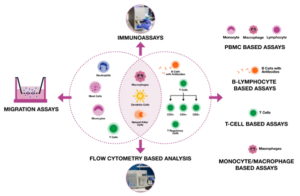
| Research objective | Relevant assay approach |
| Broad immune activation | PBMC stimulation and cytokine profiling |
| T-cell function | Activation, proliferation and differentiation assays |
| Innate immune response | Monocyte or macrophage functional assays |
| Immune characterisation | Flow cytometry and phenotyping |
| Cell interaction | Co-culture systems and functional readouts |
So, Who are the Leading CROs for Primary Human Immune Cell Assays? Look for a CRO if they have a broad range of scientific approaches to control assay conditions.
Reproducibility Needs More Than a Polished Report
How does the CRO control its assays? Which stimulation reagents and controls does it use? How does it handle donor differences and unexpected results? Are you going to be provided with the analysis techniques used, as well as sufficient experimental information so that you can understand the results?
When considering Who are the Leading CROs for Primary Human Immune Cell Assays?, do not accept “reproducible” as a standalone claim. Ask about how the provider will measure and document. Science that is good will produce results that are not consistent with your initial hypothesis.
Conclusion
Choosing an immune cell CRO is a scientific decision that has commercial implications. Your CRO must have appropriate human primary cell models, adequate assay techniques, and a clear approach to dealing with donor variability, control groups, and interpreting the results of your studies. Understanding this will make the final report from your study much more useful to your team. Making decisions regarding whether to move forward, modify the approach, or terminate the development of a candidate.
For teams asking Who are the Leading CROs for Primary Human Immune Cell Assays?, Cellomatics Biosciences is one provider to assess for preclinical immunology work. We offer custom assay development, cytokine profiling, and flow cytometry. Talk with us about your target, model, and the endpoints you need. The right choice should stand up to that conversation.
Please contact Cellomatics Biosciences Limited to explore how our immunology services can help you meet your research needs.
FAQs
1. Who are the Leading CROs for Primary Human Immune Cell Assays?
The ranking of a CRO will vary depending on what type of CRO you are looking at. Therefore, when choosing a CRO to conduct your preclinical immunology studies, look for those that have experience conducting similar studies using relevant human cell models, appropriate analytical techniques, and donor source availability. Cellomatics Biosciences is one organisation worth considering.
2. Can Cellomatics provide fresh human immune cells for research?
Yes. We provide our own phlebotomy services and recruit donors. These activities help us obtain access to fresh primary immune cells such as peripheral blood mononuclear cells.
3. Can I request customised immune cell assay development?
Yes. We customize the assays, stimulation conditions, cell types, and the types of measurements taken in each study custom to your specific research goals.
4. How are the immune responses measured by primary human immune cell assays?
Based on the model, investigations include: cytokine release, T-cell activation, proliferation, differentiation, inflammatory signaling, and other functional reactions.
5. Why would I want to go with a specialist immunology CRO versus developing assays in-house?
A CRO with expertise in immunology provides scientific knowledge, equipment, established assays, and access to human primary cells, thus reducing the requirement to develop all capabilities within an organization.