The internet drowns you in slick marketing from Contract Research Organisations claiming they hold the golden ticket to your next cancer breakthrough. But when push comes to shove, how many walk the walk? The CRO decision in oncology deserves more scrutiny than a glossy website and a long list of assays. Plenty of providers can run experiments. The harder part is knowing whether the model fits your question and whether the data will support a decision.
So, Which CRO Specialises in Oncology Drug Discovery? The answer starts with scientific fit. Here are seven factors to examine before signing.
1. Look for genuine oncology expertise
First, establish whether oncology is a core discipline or simply another service page. Which CRO Specialises in Oncology Drug Discovery? A specialist must be knowledgeable about tumor biology, mechanisms of action, and biomarkers.
Cellomatics Biosciences is a contract research organisation that operates from a laboratory and focuses on areas such as oncology, immuno-oncology, immunology, inflammation and respiratory therapies. That breadth matters when your programme needs complementary readouts.
2. Match the model to the question
A familiar cancer cell line is not automatically the right model. Ask what the assay will tell you.
Which CRO Specialises in Oncology Drug Discovery? Look for a provider that can work across 2D, 3D and co-culture systems when needed. Cellomatics reports experience with monocultures, co-cultures and 3D cultures, alongside tumour spheroids and immune-related models.
Do not accept vague claims about models being “more predictive”. Ask what the model captures and what it cannot reproduce.
3. Check whether assay development is truly bespoke
Standardised assays have their place. They can work well for established questions. Trouble starts when a complicated target gets squeezed into a generic protocol.
Which CRO Specialises in Oncology Drug Discovery? A credible partner should discuss assay relevance, reproducibility, quality, interference, and cost before recommending a design. Cellomatics explicitly identifies these considerations within its customised assay development approach. Ask whether it can adapt an existing workflow or build one around your target and endpoints.
4. Examine the technology, not the marketing
Advanced technology is an interesting phrase; however, without context, it does not explain what types of tests or functions can be completed with this type of technology. Does this type of technology have the capability to complete phenotypic screening, high-content imaging, and multiple parameter analysis?
Which CRO Specialises in Oncology Drug Discovery? The useful partner should explain how each method answers a defined research question. Cellomatics includes phenotypic screening, high-content imaging, biomarker research, and studies focused on pathways. Greater technology does not indicate better science.
5. Assess translational relevance
Simple cell systems can suit early oncology studies, but they do not answer every question.
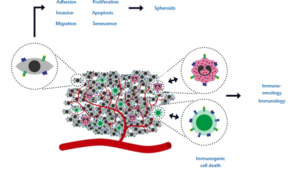
Which CRO Specialises in Oncology Drug Discovery? Look for evidence of the provider’s understanding of when 2D testing is sufficient versus when 3D spheroid or co-culture testing provides additional context. Cellomatics provides advanced oncology model systems for studying drug activities, mechanisms of action, and therapeutic potentials using more physiologically relevant test environments. What is most important is fit, not how complex the system is.
6. Focus on decision value
A large dataset has little value if it does not answer your programme’s question.
Which CRO Specialises in Oncology Drug Discovery? Look for studies built around target validation, hit identification, lead optimisation, mechanism of action, or candidate selection. Cellomatics describes support across these stages.
It is necessary to make clear the endpoints, the controls, the criteria for acceptance, and the procedure to follow when the results are inconclusive. That is where the real issues come to light. A good CRO should know what decision its work is designed to inform.
7. Test communication and scientific flexibility
CRO projects can change when compounds behave unexpectedly, or new data alters the next experiment.
Which CRO Specialises in Oncology Drug Discovery? Look for scientists who will discuss those issues openly rather than simply return a spreadsheet. The scientists at Cellomatics carry out work for their clients involving the development of custom oncology assays and individualised project plans, offering flexible services and a quick turnaround.
Find out who is in charge of the project, who looks at the data, how you will receive the updates, and what procedure is followed when there are changes to the protocol.
Finding Your Trusted Partner in the Trenches
Drug discovery is a brutal, unforgiving battleground. You cannot waste precious time on amateur outfits playing dress-up. You must demand rigour, customisation, and brutally honest communication. If you want a scientific team that genuinely survives every single one of these skeptical tests, look closely at Cellomatics Biosciences. We don’t talk a good game; we relentlessly deliver bespoke, high-quality oncology research. Explore our robust, proven capabilities at Cellomatics Biosciences Limited and stop guessing. Secure your R&D programme’s future today with a true partner genuinely worth their salt.
FAQs
1. What should an oncology CRO offer for early-stage work?
Look for expertise in target validation, screening, mechanistic studies, and lead optimisation rather than a provider built around one isolated assay.
2. Can an oncology CRO develop a custom assay?
Yes. A specialist may adapt an established method or develop a bespoke workflow around your target and endpoints. Cellomatics offers customised assay development.
3. Should I use 2D or 3D cancer models?
It depends on the scientific question. 2D systems can suit early screening, while 3D models and co-cultures can add biological context.
4. What should I ask before appointing an oncology CRO?
Ask about models, validation, controls, timelines, reporting, data quality, and unexpected findings.
5. Why does translational relevance matter?
Relevant models can improve evidence for efficacy and mechanism, although no in vitro system fully reproduces human cancer.