

Biotech and pharma teams are under continual stress to get candidates through discovery with alacrity. Timelines are short, internal lab capacity is scarce and regulators are increasingly demanding data that is representative of human biology. Consequently, so many organizations are now left asking: where can biotech companies outsource cell-based assays without sacrificing scientific excellence?
For respiratory programmes, Cellomatics Biosciences offers a specialist route. We are a respiratory CRO providing in vitro airway models that support preclinical drug discovery. This article outlines the pressures driving companies toward outsourcing, the disease areas and screening capabilities we cover, and how our UK-based partnership model supports programmes from early target validation through to preclinical evaluation.
Pipeline pressures pushing biotechs toward specialist CROs
Most teams don’t plan to outsource on day one. They get pushed there by a few familiar problems:
- The cost and time of building airway and lung models in-house, including cell sourcing and validation.
- Limited capacity when programmes need to scale quickly.
- Weak translational value from models that don’t reflect human biology.
That’s why teams asking “where can biotech companies outsource cell-based assays” see outsourcing as a strategic move, not a shortcut.
Respiratory disease coverage built for real pipelines
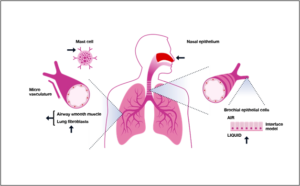
Respiratory disease isn’t one problem, so one model never fits everything. Our platforms combine human airway and lung cells, immune cell assays and advanced imaging, and we adapt them to your target and pathway.
| Disease Area | What Cellomatics Evaluates |
| Asthma and airway inflammation | Inflammatory signalling, hyper-responsiveness, airway remodelling |
| COPD | Cellular responses in chronic airway disease |
| Pulmonary fibrosis | Fibrotic signalling, oxidative stress, anti-fibrotic compounds |
| Viral airway infection | Host-virus interactions, antiviral activity |
| Allergic airway disease | Immune-driven inflammation
|
Teams asking where can biotech companies outsource cell-based assays can treat this list as a starting point.
Screening capabilities from target validation to lead optimisation
Human-relevant airway models
Our models include primary human cells, air–liquid interface cultures and co-cultures, as well as precision-cut lung slices that retain native tissue architecture. A cell line in a dish can miss what happens in real airways. Human-derived systems usually predict clinical response better, which matters when you’re picking candidates.
Scalable high-throughput and high-content screening
For larger compound libraries, we run high-throughput and high-content screening with automated workflows and imaging. You get multiparametric readouts, not a single number. Results are repeatable; therefore, go/no-go decisions rely on information you can believe in. We also support everything from target validation through lead optimisation.
What each partner type gains from Cellomatics
Different clients need different things from a CRO. Here’s how that plays out in practice.
| Client Type | What They Need | What Cellomatics Delivers |
| Biotech companies | Fast, affordable early validation | Flexible, tailored assay strategies |
| Pharmaceutical companies | Reliable compound evaluation | Mechanism-of-action data and scalable screening |
| Research organisations | Specialist lab support | Expert scientists and bespoke project plans |
Smaller teams usually want answers before the next funding round. Larger ones want mechanistic depth. Both ask “where can biotech companies outsource cell-based assays” and expect dependable data.
UK-based partnership that keeps programmes moving
Working with a UK based CRO means you talk directly to the scientists doing the work. Our Nottingham team scopes the project with you early, constructs a bespoke plan and maintains quick turnaround. We support partners worldwide, so distance rarely gets in the way. For anyone asking “where can biotech companies outsource cell-based assays”, three advantages stand out:
- Human-relevant respiratory models
- Flexible assay development
- Decision-driving preclinical data
None of this is flashy. It simply means far fewer surprises between kick-off and final report.
Next step: partner with a respiratory CRO that delivers
Respiratory drug discovery moves faster when your models match human biology and your lab capacity isn’t the bottleneck. So, where can biotech companies outsource cell-based assays for lung and airway work?
Cellomatics Biosciences is a solid place to start: specialist expertise, human-relevant models, flexible assay design and scientists who stay close to your project. If “where can biotech companies outsource cell-based assays” is on your to-do list this quarter, talk to us.
We’ll say honestly whether our models fit your project. Request a consultation, or open our Respiratory Hub for detailed data sets and a closer look at the offering.
FAQs:
1. What raw data should a CRO deliver besides a summary report?
Sponsors should ask for plate reader files, image data, analysis methods, control results and QC records, not only charts. Raw files let internal teams re-analyse results and defend decisions later.
2. Can inside-house assay be transferred to an outside CRO ?
Yes, but it needs a strategy. Teams typically standardize the protocol, cell lines, reagents and acceptance criteria, then conduct a pilot to verify that the CRO mirrors in-house performance prior to scaling.
3. How can a CRO safeguard proprietary compounds and project data?
Security begins with a signed nondisclosure agreement. Sponsors should also inquire about limited data access, secure storage, facility security and if any external subcontractors will process compounds, samples or results.
4. Do donor differences affect results in outsourced human cell assays?
Yes. Donor age, sex and health background can change cell responses. Using multiple donors, or reserving the same cell lot across a study, reduces variability and improves confidence in the findings.